
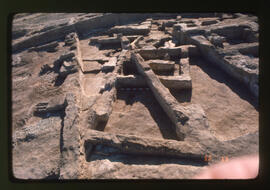
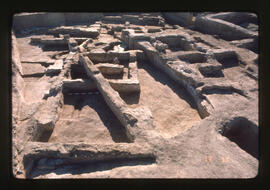
![<N_LPA4-05> [Ubaid Period: 5300-3700 BCE.] Songor B Remain I-5, Level I, XII, XIII-7,8, Kiln details](/uploads/r/the-institute-for-cultural-studies-of-ancient-iraq/c/4/9/c49b58e6258492757268e0cbce95ded50caa70b5a160933d3d1c2d85d58c977d/LP-A4-05-001s_142.jpg)
![<N_LPA4-05> [Ubaid Period: 5300-3700 BCE.] Songor B Remain I-5, Level I, Kiln details](/uploads/r/the-institute-for-cultural-studies-of-ancient-iraq/2/9/c/29c17fc7a50523153039638928b2157ba58759f6ebcab00bfacfac9b91e5808b/LP-A4-05-002s_142.jpg)
![<N_LPA4-05> [Ubaid Period: 5300-3700 BCE.] Songor B Remain I-5, Level I, Kiln details](/uploads/r/the-institute-for-cultural-studies-of-ancient-iraq/b/f/6/bf63307f07872643afbfa9a2cf490c1edb56971de53f2f4b7279c90950ae7956/LP-A4-05-003s_142.jpg)
![<N_LPA4-05> [Ubaid Period: 5300-3700 BCE.] Songor B Remain I-5, Level I, Kiln details](/uploads/r/the-institute-for-cultural-studies-of-ancient-iraq/c/f/6/cf67dbbdf23ee666b8f8a3b6d128aaba81071c63fab595795626639662f5da90/LP-A4-05-004s_142.jpg)
![<N_LPA4-05> [Ubaid Period: 5300-3700 BCE.] Songor B Remain I-5, Level I, Kiln details](/uploads/r/the-institute-for-cultural-studies-of-ancient-iraq/3/6/8/3684a4b9a09236dee9d3c0524596019133d64455a294c2da44c7b681e97129fe/LP-A4-05-005s_142.jpg)
![<N_LPA4-05> [Ubaid Period: 5300-3700 BCE.] Songor B Remain I-5, Level I, Kiln details](/uploads/r/the-institute-for-cultural-studies-of-ancient-iraq/a/6/7/a674c1972fc772f1eadb5843ef7b2a110a295e9f39efbffb470b4c647d01c64d/LP-A4-05-006s_142.jpg)
![<N_LPA4-05> [Ubaid Period: 5300-3700 BCE.] Songor B Remain I-5, Level I, Kiln details](/uploads/r/the-institute-for-cultural-studies-of-ancient-iraq/4/d/1/4d18f781cfaa0e87941b83755e03d7aa4cb10b3074ebab742aca1ac399f28f61/LP-A4-05-007s_142.jpg)
![<N_LPA4-05> [Ubaid Period: 5300-3700 BCE.] Songor B Remain I-5, Level I, Kiln details](/uploads/r/the-institute-for-cultural-studies-of-ancient-iraq/4/8/e/48e035e0e021cdc4f2824374506b49f7f7186a80cd9e93f6e6d1e3a9eb4d1d17/LP-A4-05-008s_142.jpg)
Zone d'identification
Cote
Titre
Date(s)
- 2024-00-00 (Création/Production)
Niveau de description
Étendue matérielle et support
835
Zone du contexte
Nom du producteur
Notice biographique
Histoire archivistique
Source immédiate d'acquisition ou de transfert
This is a record of the research conducted by Kokushikan University's Institute for the Study of Ancient Iraqi Culture from its founding to 1983.
Zone du contenu et de la structure
Portée et contenu
‘Usiyeh
The site of ‘Usiyer is located on a river terrace overlooking the Euphrates River in western Iraq. This area is off the irrigated farming area to the south and the rain-fed farming area to the north, and agriculture is not possible without water lifting systems such as water wheels, so the remains of old water wheels can still be seen along the river. On the other hand, the river terraces are covered with exposed limestone.
The survey at ‘Usiyeh was conducted as part of the excavation of the submerged area in the Middle Euphrates River basin following the construction of the Haditha Dam. A Japanese expedition headed by Prof. Hideo Fujii of Kokushikan University conducted the excavations of Areas A and B of the site from 1983 to 1984.
There were several mysterious remains at the site of ‘Usiyeh. These include artificially created hills, rows of stones whose purpose is unknown, and a tomb that was suddenly constructed around 2600 B.C. (Early Dynasty III period). Kokushikan University opened two areas: Area A, which contains a huge tomb and a series of remains, and Area B, which contains a group of graves.
The most striking feature of Area A is a huge tomb built underground around 1800 B.C. (Isin-Larsa period). The tomb consists of two parts. The twin chamber with an anterior chamber and three chambers behind the twin chambers. The twin chambers were used for burials, and the back chamber was probably used to store furniture, etc. However, the burial conditions are not known because the tomb has been robbed many times. However, even under such circumstances, a large number of beads, cylinder seals, metal objects, and pottery have been found. These artifacts indicate that this huge tomb was the tomb of a person of high rank.
Scattered on top of and around the tomb were a large number of terracotta life-size lion statues. These are thought to be guardian statues placed on either side of the gates of temples. In other words, it can be inferred that there were temples and other public buildings in Area A.
The region of the Middle Euphrates River where the Usiyeh is located is not suitable for agriculture, but it is on an important trade route between Mesopotamia and Syria. It is also a region where territorial disputes have always developed from the past to the present, and it is known that even around 1800 B.C., countries such as Assyria in the north, Babylon in the south, Mali in the west, and Eshnunna in the east were planning to expand into this region. We can imagine that the site of Usiyer was probably in the middle of a struggle for territorial expansion among these countries.
Évaluation, élimination et calendrier de conservation
Accroissements
Mode de classement
Zone des conditions d'accès et d'utilisation
Conditions d'accès
Conditions de reproduction
Langue des documents
- anglais
Écriture des documents
- arabe
Notes de langue et graphie
Caractéristiques matérielle et contraintes techniques
Instruments de recherche
The Institute for Cultural Studies of Ancient Iraq
Zone des sources complémentaires
Existence et lieu de conservation des originaux
Existence et lieu de conservation des copies
Unités de description associées
Zone des notes
Identifiant(s) alternatif(s)
Mots-clés
Mots-clés - Sujets
Mots-clés - Lieux
Mots-clés - Noms
- Accumulator (ISAD 3.2.1) (Accumulator)